25 years on from devolution, we need to put digital technology at the heart of political life in Scotland and
Wales.
We need to talk
Digital is inescapable now - we talk to government via phones and laptops, we get the news and watch films the
same way. Everything is changing, and there are crises on crises, at home, abroad, online. 25 years after the
birth of the digital age there are lots of questions crying out to be discussed. Questions about how the state
works, how society and culture have changed, what sort of economy we want.
Click to explore the questions we want to raise in the May elections in Scotland and Wales.
Digital society
The digital world needs to be brought into the political mainstream and not regarded as a rare and
delicate thing that needs special technocratic management:
How do we get an independent digital news media?
What ethical frameworks should we use in the digital world?
What comes after the high nationalisms that existed in a world of national newspapers, national
radio, national education, national television, national literature, now that those are gone?
Particularly for the English speaking world?
How do we expand the digital world in Welsh, Gaelic and other minority languages?
Are we at risk of losing access to our cultural history with online and streaming? How do we
preserve our digital patrimony?
How do we tackle Child Sexual Abuse Material and harassment in the online world? Is it simply baked
into the tools? Should employees have criminal liability?
What are the consequences of digital society for social trust? What needs to happen to rebuild it?
Will AI take all our jobs? Is it a problem if it does?
How do we push back against the surveillance workplace, and the gigification of the economy and put
people back at the centre?
What forms of political organisation do we need for the new world? How should the political parties
react and change?
What is the relationship of the citizen and the state? How has it been changed by digitisation?
Should we be worried? What are civil liberties in an all-digital, joined up state?
What happens if anti-constitutional actors seize control of the state - as has happened in America?
How do we make it possible for people who can't or won't be digital natives to live and
thrive in society?
What is 'just enough' internet?
How has digital changed education? What effect is AI having?
What needs to be done to protect childhood? Should children have phones in school? What restrictions
should be placed on their online lives?
How do we tackle the epidemic of crime and fraud?
The state and public sector
We need to have a national conversation about the state and digital systems.
Some are very practical about the day-to-day work of government:
How do the parliament and government make decisions about digital systems? Do our legal and
parliamentary processes need reform?
How do we fund our state digital infrastructure and oversee that spending?
How are technical decisions taken? Are we sure there is the correct oversight?
Why do big digital projects often fail? And how do we make them better?
How do we provide services to those who can't use digital channels: the old, the vulnerable, the
damaged, the chaotic? How do we put people at the heart of the modern digital state?
How do we join services up? How do we co-ordinate them?
Some touch on the state's role as rule-maker for the country:
How do we address the epidemic of online fraud? How do we stop the industrial production of Child
Sexual Abuse Material. How can we free the digital world from online harassment - particularly of
women?
What does Trading Standards mean in the digital world?
Where are crimes committed in the digital world? How do we get justice served? What are the
implications for our relationships with other countries and international institutions?
How do we ensure that digital markets are free markets - free of market abuse, manipulation, lies
and deceit? How do we tackle monopolies and monosonies?
What private companies and services have become utilities that ought to be appropriately regulated
like their analogue counterparts?
Are there investment models other than the Silicon Valley one? Is Silicon Valley over? Should our
digital economy remain California-orientated?
What limits are there on acceptable business models for new digital businesses?
The roiling of recent problems have made some critical:
How do we protect the citizen from the new digital powers of the state?
How do we make the state coup proof from internal enemies of democracy?
Where should our data be stored?
Is American and Chinese tech an existential threat? What we do if the Americans turned-off the
government email system like they did the International Criminal Courts?
Does the cross-border nature of digital technology require an international institutional response?
And if so what institutions?
Is ownership important in the modern world?
How powerful are big tech companies anyway? Should governments be afraid of them?
How do we build an appropriate defence posture in a world of hybrid warfare?
How do we protect society and politics from bad actors, state operations, dirty money and
corruption?
And the different impulses call for trade-offs that can only be political:
To what extent is joined-up government a threat to liberty?
What is just enough digital?
What is freedom in the digital age? And how has it changed from our analogue notions?
What do we mean by social trust? Is it possible in the digital age? And if it is, how do we build
it?
What are the trade-offs between encryption and security?
The internet makes foreign affairs of domestic and devolved affairs. What happens there, happens here,
the international dimension cannot be escaped.
What institutions above the UK are required to regulate the digital world and bring it inline with
democratic norms?
How do we need to internationalise our legal and criminal justice systems so that crimes committed
here with victims there, and vice-versa, can be appropriately dealt with?
What do we need so that devolved jurisdictions can meaningfully sanction global corporations?
The private sector and the economy
We need to have a national conversation about the private sector and the economy.
There are real questions about the activities of private companies that need to be addressed:
Have we created a surveillance economy? Are there limits to what companies should be able to know
and collect about us? As citizens? As employees?
Who owns our data and who should? Who should be able to collect it? Who should be able to buy it?
Where should it be stored?
Are the limits on acceptable business models for new digital enterprises?
How do we ensure digital markets are free? Should citizens have formal rights to take their data
with them? Should platforms be forced to be open? What do anti-monopoly provisions look like in the
digital age?
How do we ensure that private businesses don't erode social trust and endanger society?
What are the limits on copyright? How do artists and creators get paid?
Is AI all its cracked up to be? Is it a bubble? If so, what happens when it pops?
What obligations should private companies have to prevent their users being harassed, stalked or
abused on their platforms?
We need to talk about freedom in markets and regulation:
What is freedom of the press in the digital age? How do we ensure the effective scrutiny function
that the analogue press did is preserved and expanded? What are the private sectors obligations with
respect to disinformation and hybrid warfare/
What alternative models exist for utility digital platforms (like mail, search, hosting)?
How should we support economic development in the digital sector? Is there an alternative to the
Silicon Valley model? Do we need to orientate away from California?
How do we get from a model of economic success that is "own an monopoly" to one that is
"provided by a deep, rich, competitive sector"?
What is the role of education and universities in the private sector and economic development?
Does ownership matter in the modern world? And if it does what are the implications for our local
economies?
Come to our hustings
There will be a
hustings on
Digital Society
in Glasgow on Wednesday April 8th - and another on 23rd April in Edinburgh focussing on
the private sector and the economy. There will also be a post-election event on the state and public sector - but the details of that will only be finalised after the vote.
And we need your help.
Lots of people are trying to buy influence over digital policy - this needs to be a movement of
practitioners and citizens.
Join us in calling for this debate
Our pledge has been signed by Stephen Coleman, Brian Corcoran, Geoff Ballinger, Andy Williams and Karen Meechan
(from the private sector), Richard Pope, Vijay Luthra, Simon Roberts, Jerry Fishenden (from the public sector),
Hugh Wallace, Daniel Winterstein (from R&D), Susan Aitken, John McTernan (from politics), Anna Burnside (from
journalism), Derek Alton (from Canada!) and 22 others.
Help us raise £10,000
There are a lot of well funded groups pushing digital agendas, and many of those have a hidden or not so hidden
commercial purpose. This is a grassroots practitioners movement and has very deliberately not sought major
institutional funding.
We have done a lot of work on how to answer some of these questions and it will only cost about £30 per elected
member to get our materials printed and we would rather ask you to give
us a few quid.
Every donor (who selects it!) will get their name on the letter with the bookshelf!
This will cover printing and publicity costs and help us organise meetings and hustings.
This is a joint initiative of Transform Wales and Foundations of the Digital State - and this is a
practitioner-led movement to change the way government works - based on practical experience and expertise.
What we've done already
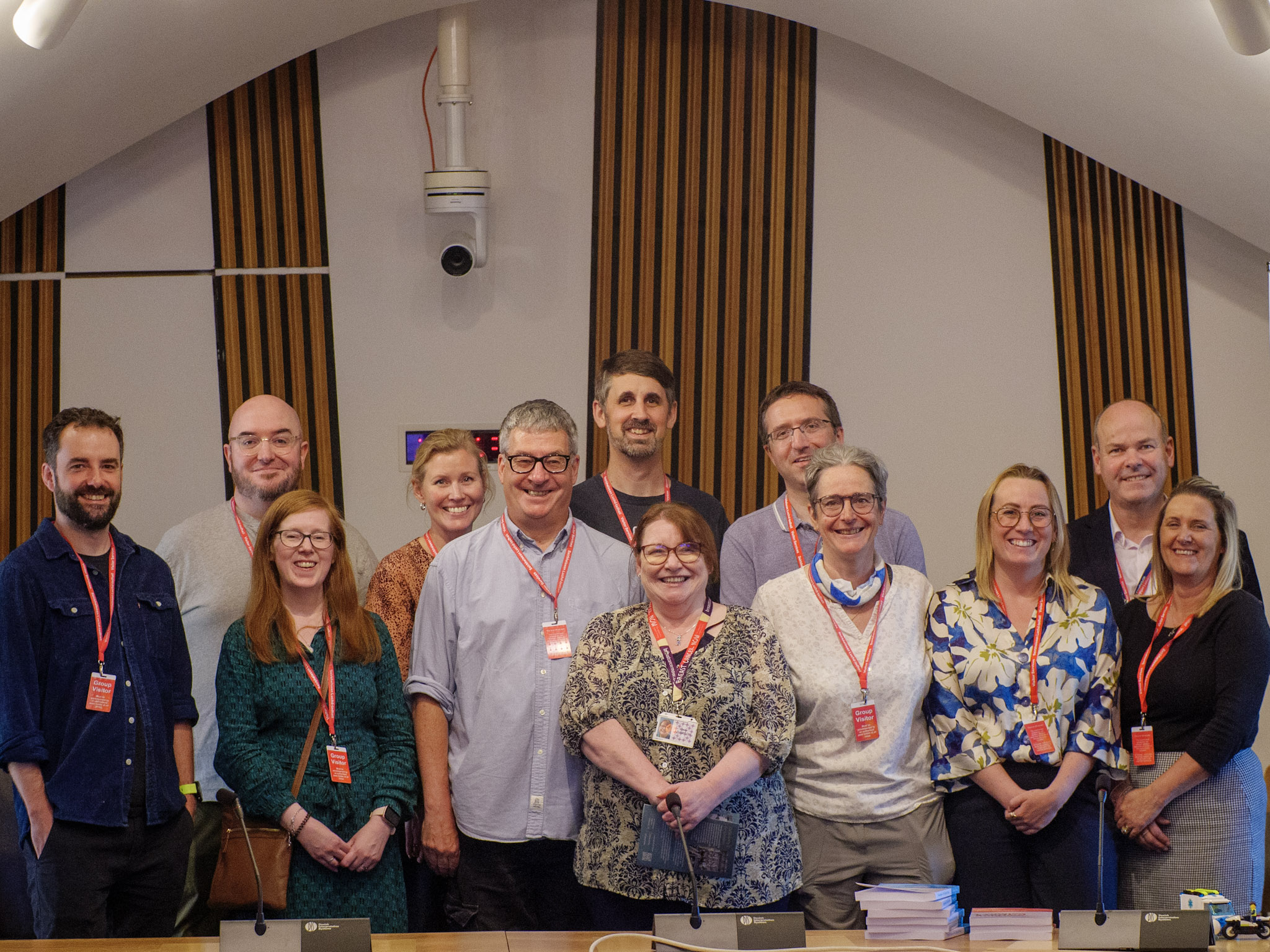
There was a parliamentary drop in at Holyrood with all parts of the tech sector from economic
development, startup support, R&D, GovTech and CivTech:
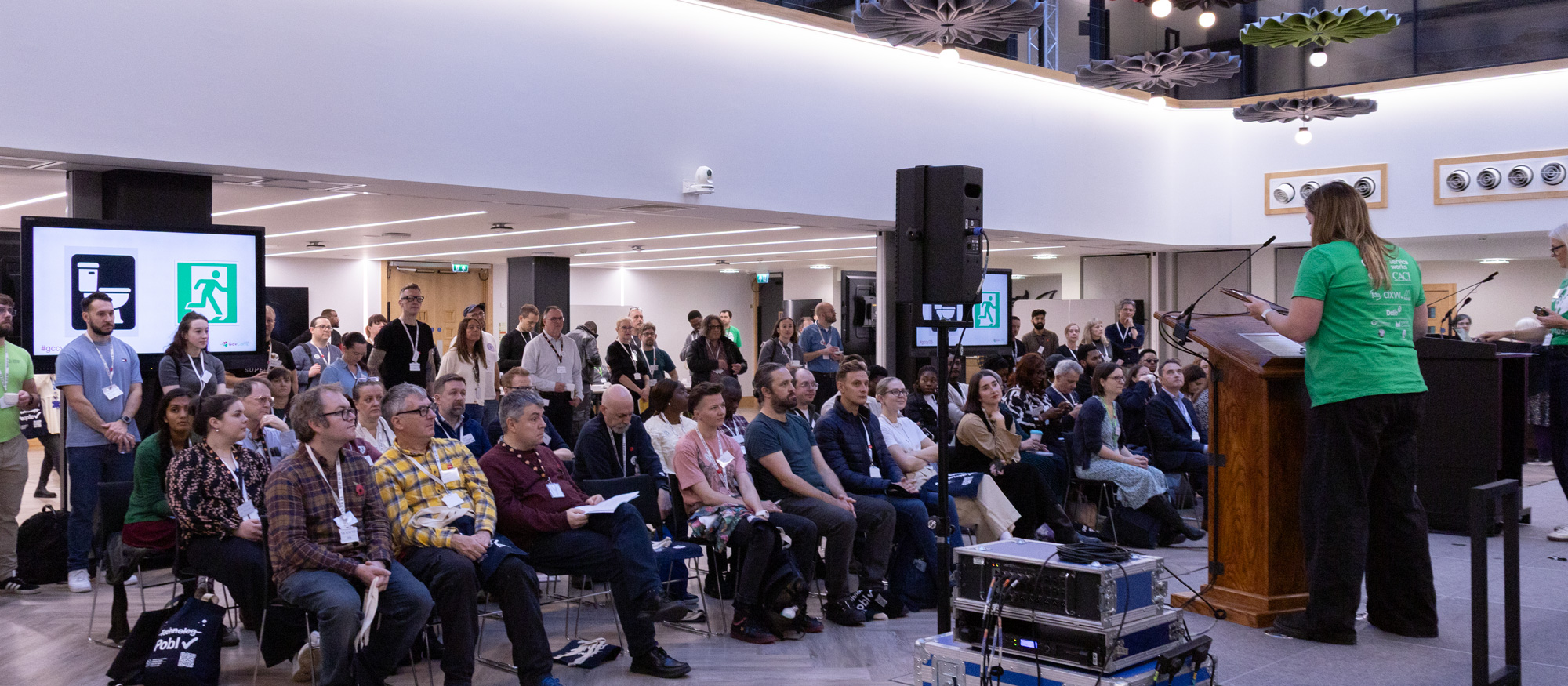
and events in Wales like Gov Camp Cymru in the main government buildings in Cardiff that brought civil servants
and
practitioners together to discuss the challenges:
and more work behind the scenes across the civil service and civil society in both Scotland and Wales.
How will we spend your money?
The preparation, the thinking and the analysis has been done, let's make change happen - help us put these
critical issues on the agenda in the May elections.
Before the elections
We are organising public meetings and conversations across Scotland and Wales, involving all the major political
parties and the entire digital sector.
Nobody has all the answers - but everyone's voice must be heard - not just from Scotland and Wales, but the wider
UK and Europe.
Your money will help us do that
After the elections
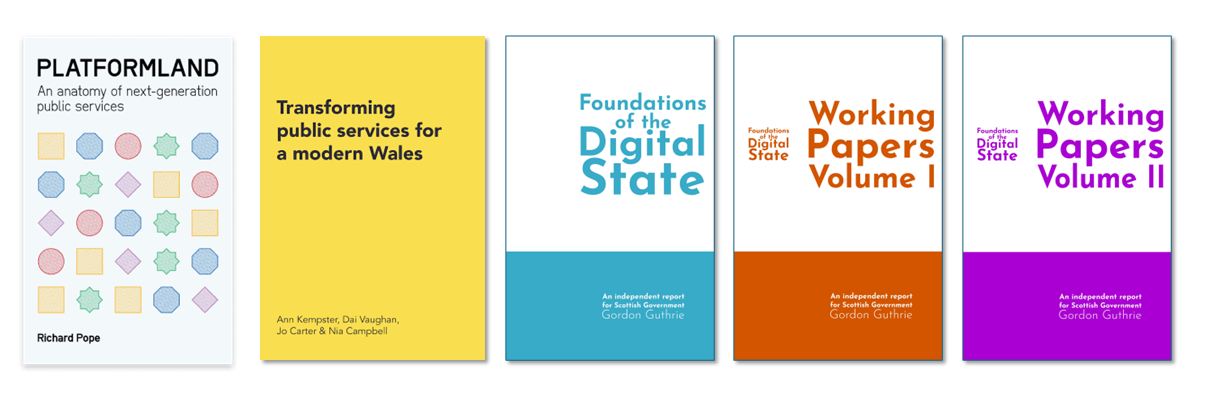
We will be delivering our bookshelf to all the newly elected members of the Scottish Parliament and Senedd. It
contains:
Platformland: An Anatomy of Next
Generation Public Services by Richard Pope - a recipe book for transformed, world-class digital
public
services based on his work at GDS in Whitehall and Research Fellowship at the
Kennedy School of Government in Harvard.
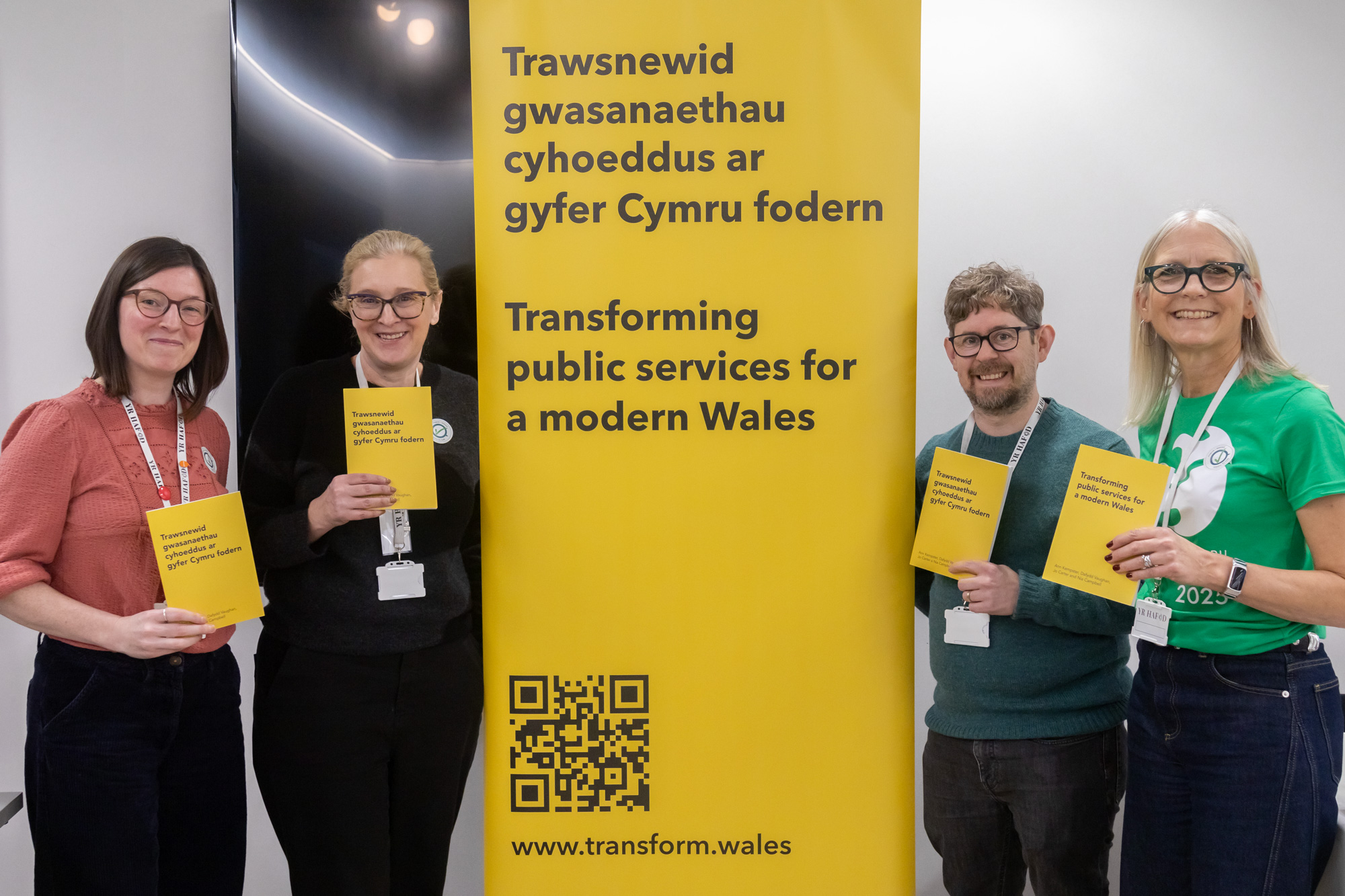
Transforming Public Services for
a Modern Wales by Ann Kempster, Dai Vaughan,
Jo Carter and Nia Campbell - a collective of seasoned digital professionals with extensive experience of
delivering
modern public services.
The Foundations of the Digital State by Gordon
Guthrie - a detailed examination off digital decision making based on his experience as an international tech
executive and his Research Fellowship at Scottish
Government.